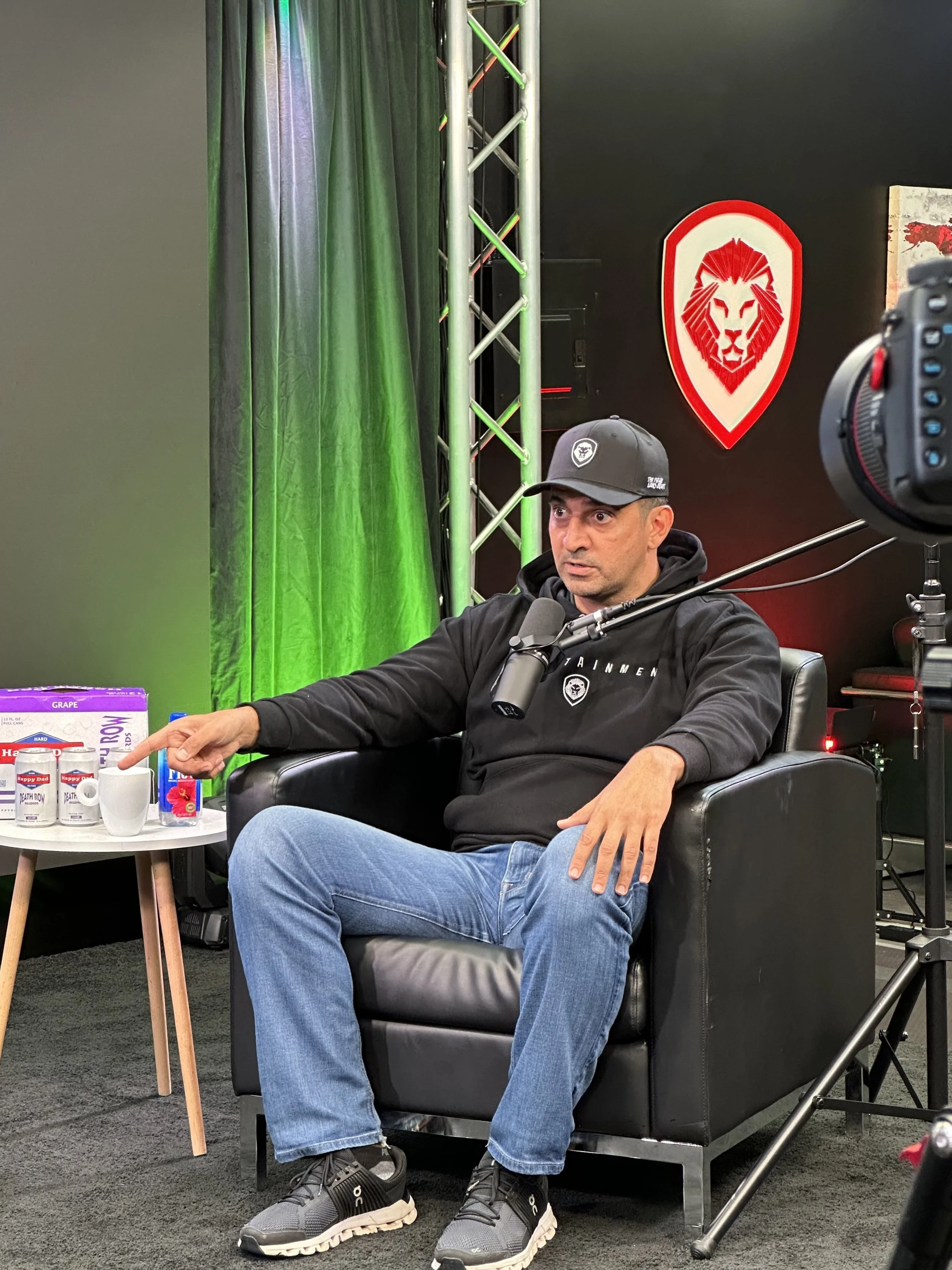

The honest answer is that one podcast episode usually gives you somewhere between 3 and 10 usable social clips, but the real number depends less on episode length and more on how the conversation is structured.
Some recordings only produce one or two clips worth posting. Others can easily produce eight or more. The difference is usually not the camera package. It is whether the episode contains clear, self-contained moments that make sense when removed from the full conversation.
If you are recording in a studio or building a repeatable content system for your brand, this is one of the most useful questions to answer before the session starts. It changes how you plan the episode, how you edit it, and what kind of production support actually makes sense.
A realistic clip range for one episode
In most cases, these are the ranges that make sense:
1 to 3 clips: common when the conversation is broad, loose, or missing sharp moments that stand on their own.
3 to 7 clips: a strong, realistic outcome for most well-run podcast episodes.
8 to 12+ clips: possible when the episode is tightly structured, highly specific, or full of memorable stories, strong opinions, and clear takeaways.
That is why “how many clips” is only partly an editing question. It is also a format question. If the episode does not give you strong moments to cut, the editor cannot invent them afterward.
What actually makes a clip usable
A usable social clip is not just a random excerpt. It usually needs a few things working at once:
a fast hook that makes sense in the first second or two
one idea at a time instead of a long answer that wanders
clear language that still works without the full episode around it
emotion, specificity, or tension so the clip feels worth stopping for
clean visuals and audio so the post looks intentional instead of improvised
A strong clip can be tactical, funny, opinionated, surprising, or emotionally clear. What matters is that it survives on its own.
Why some episodes barely produce any clips
The most common reason is that the episode was recorded as one long, open-ended conversation without enough distinct beats inside it.
If the host asks broad questions and the guest answers in long paragraphs, the final episode may still be good, but the number of clean clip moments drops fast. The same problem happens when the speaker constantly references earlier context, which makes the isolated excerpt harder to understand.
Low-energy delivery, weak framing, and messy audio also reduce how much of the footage feels worth repurposing.
How to record for more clips without making the episode feel fake
If you want more usable content from one recording, the solution is usually not to force viral lines. It is to create more intentional structure.
Ask tighter questions. Specific prompts usually create shorter, clearer answers than open-ended rambling.
Ask for stories, numbers, or opinions. Concrete details usually clip better than generic advice.
Break the episode into sections. Distinct segments make it easier to isolate clean moments later.
Leave room for pickups. If a strong answer almost works as a clip, a quick second take can save it.
Keep the framing and audio consistent. The easier the footage is to watch, the more of it stays usable in short form.
This is also why a focused session format often works better than a completely free-form one. If you want a cleaner sense of how a booking usually flows, read what a 1-hour podcast session actually looks like.
Quality matters more than raw clip count
A lot of people chase the idea that one episode should automatically become 20 or 30 clips. Sometimes that happens, but it is not the best default expectation.
Three strong clips are usually more valuable than fifteen weak ones. If the short-form content feels repetitive, vague, or over-cut, it stops helping the brand. In practice, a smaller number of sharper clips usually performs better and feels more aligned with the long-form episode.
The goal is not to squeeze every second of footage. The goal is to pull out the moments that actually deserve another life on Instagram, LinkedIn, TikTok, YouTube Shorts, or Reels.
What we usually see at 115creative
A focused studio session often produces one full episode plus several clean short-form moments, especially when the guest is articulate and the host has a strong outline.
In practical terms, that usually means one polished episode and a handful of clips that can be turned into short-form content afterward. If the session is built more intentionally around repurposing, the clip count usually goes up because the conversation naturally creates more self-contained moments.
That is part of the advantage of a broader podcast production workflow instead of thinking only about the room. If you know clips matter, it makes sense to shape the recording and the editing around that from the start.
When it makes sense to pay for clip editing
If you are only publishing full episodes, basic editing may be enough. If the podcast is supposed to feed your social channels, though, clip editing becomes part of the actual content system, not just an optional add-on.
That is especially true for founders, brands, and businesses using the podcast as a visibility tool. In that case, clips are often the part that travels furthest, even if the full episode does the deeper trust-building work.
If you are still pricing the post-production side, start with how much podcast editing costs and then compare it with the broader view in how much podcast production costs in Canada.
Final Thoughts
One podcast episode can absolutely create multiple social clips, but the realistic number depends on the strength of the conversation, the quality of the capture, and whether the session was designed with repurposing in mind.
If you want a clean expectation, think in terms of 3 to 7 strong clips from a good episode, with the possibility of more when the format is especially sharp.
If you want help recording a show that is easier to repurpose afterward, you can explore the Toronto podcast studio, look at the fuller production support, or reach out on WhatsApp or by email.